Python系列之笨方法学Python是我学习《笨方法学Python》—Zed A. Show著

的学习思路和理解,如有不如之处,望指出!!!

本节主要学习for循环语句和如何创建一个列表

[TOC]

源代码

1
2
3
4
5
6
7
8
9
10
11
12
13
14
15
16
17
18
19
20
21
22
23
24
25
26
27
28
29
30
31
# ex32.py

the_count=[1
fruits=['apples'
change=[1

#this first kind of for-loop goes through a list
for
print

#same as above
for
print

#also we can go through mixed lists too
#notice we have to use %r since we don't know what's in it
for
print

#we can also build lists,first start with an empty one
elements=[]

#then use the range function to do 0 to 5 counts
for
print
#append is a function that lists understand
elements.append(i)

#now we can print them out too
for
print

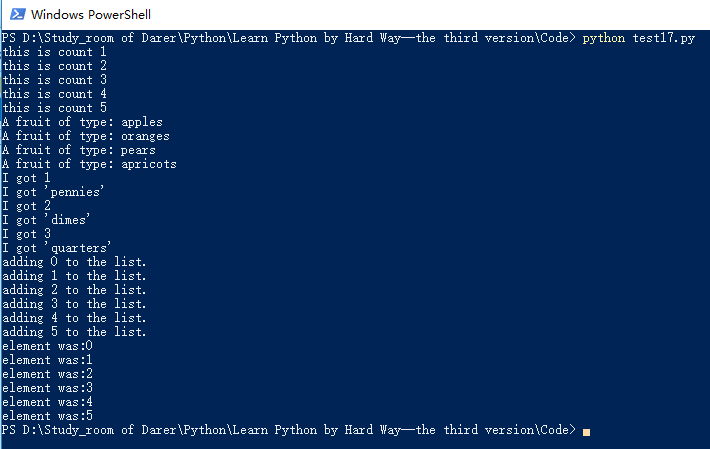
应该看的结果

这里需要注意的一点:

注意%r%s输出结果的不同

这个知识点,前面有介绍过

本节需要学习的知识

  1. range()指令

range() 函数可创建一个整数列表,一般用在 for 循环中

标准语法

1
range(start, stop[, step])

参数说明

  • start: 计数从 start 开始。默认是从 0 开始。例如range(5)等价于range(0,5);

  • stop: 计数到 stop 结束,但不包括 stop。例如:range(0, 5) 是[0, 1, 2, 3, 4]没有5

  • step:步长,默认为1。例如:range(0, 5) 等价于 range(0, 5, 1)

示例

1
2
3
4
5
6
7
8
9
10
11
12
13
14
>>>range(10
[0
>>>
[1
>>>
[0
>>>
[0
>>>
[0
>>>
[]
>>>
[]
  1. append()指令

append() 方法用于在列表末尾添加新的对象。

标准语法

1
list.append(obj)

参数说明

  • obj – 添加到列表末尾的对象。
  1. 如何创建二维列表

就是在列表中包含列表,如[[1,2,3],[4,5,6]]


这是**《笨方法学Python》**的第十七篇文章

希望自己可以坚持下去

希望你也可以坚持下去