Test13-用函数写一个简单的模块
Python系列之笨方法学Python是我学习《笨方法学Python》—Zed A. Show著
的学习思路和理解,如有不如之处,望指出!!!
本节我们利用前面学习的Python函数(def)知识,做一个简单的模块(module),然后我们从外部调用这个模块的函数。
[TOC]
源代码
1 | # ex25.py |
我们来分析下以上代码中,每一个函数的作用
把句子中的字母分离,然后返回到
words中把
words中的字母重新排序,然后返回到sorted_words中输出
words中存储的第一个字母输出
words中存储的最后一个字母把重新的排序的字母组成一个句子,然后返回到
sorted_words中输出
words的第一个和最后一个字母输出
sorted_words的第一个和最后一个字母
你应该看到的结果
注意:我对上面这个代码文件的命名是test13.py
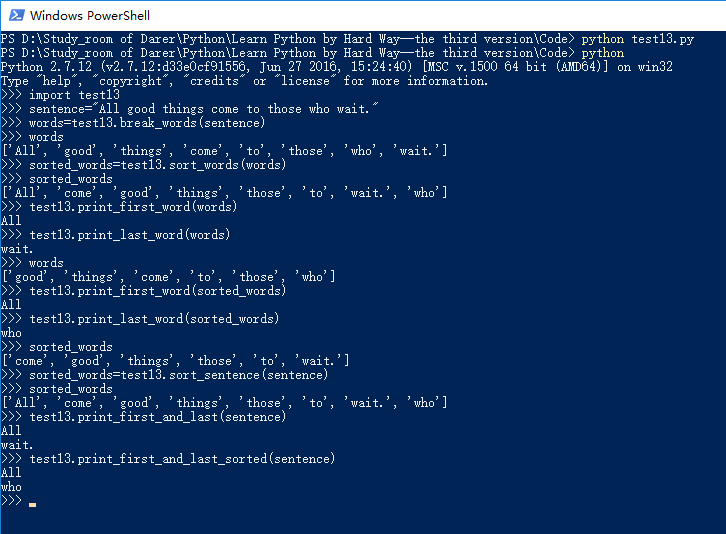
我们来分析下编译时每一句的作用是什么?
在第5行,将
test13.py执行了import,和我们前面介绍的import作用是一样的。在import的时候是不需要加.py后缀的。把test13.py当成一个模块module来使用,在这个模块里定义的函数是可以直接调用的。第6行创建了一个语句
第7行使用
test13调用第一个函数test13.break_words。其中的.符号可以告诉Python:“我要运行test13模块里那个叫break_words的函数。”第8行只是输入
words,而Python会在第9行打印出words这个变量里的内容,输出的结果是一个列表,后面小节会讲到的第10~11行使用
test13.sort_words来得到一个排序过的句子第13~16行使用
test13.print_first_word和test13.print_last_word将第一个词和最后一个词打印出来第17行和第8行的作用是一样的,输出
words这个变量里的内容第19行和第21行的作用同上,是打印出第一个词和最后一个词
第23行和第8行的作用类似
第25行调用函数
test13.sort_sentence剩下几行的作用都和前面的作用都类似了
本节要掌握的知识
pop() 函数用于移除列表中的一个元素(默认最后一个元素),并且返回该元素的值。
标准写法:
1 | list.pop(obj=list[-1 |
参数:
1 | obj -- 可选参数,要移除列表元素的对象。 |
示例:
1 | aList = [123 |
这是**《笨方法学Python》**的第十三篇文章
希望自己可以坚持下去
希望你也可以坚持下去